Showing posts with label phonics. Show all posts

Thursday, February 12, 2015

Phonics

This is a review of apps related to phonics instruction.  The apps selected here were chosen based on their ability to complement a teacher-student lesson, not merely to act as a computer tutor (with the exception of Lexia). Furthermore, these apps can augment a multisensory approach to mastering phonics.

Lexia - Free app, subscription needed to complete activities.


Lexia now offers iOS versions of the computer software that we currently subscribe to.  You must log in as a teacher first then you will be able to have your students log-in using their usernames and passwords.  Parents - discuss with your child's teacher to see if this is a resource that can be used on your home iPad.
 
Strategies:
 
Core 5:
 
myLexia (for teachers to monitor student progress):


ABC Spelling Magic - Free to download, $0.99 for Deluxe


Spelling Magic produces excellent letter sounds, far superior to the other apps listed on this page.  For example, the b and p are pure /b/ and /p/ sounds, and the r sounds like /r/, not /err/.

There are two modes of play: letter cards and 'movable alphabet'. You can choose which group of cvc words you want to work on based on vowel, or choose to practice them all.

https://itunes.apple.com/us/app/abc-spelling-magic/id429301553?mt=8


First Words Deluxe - $4.99

Similar to Spelling Magic, First Words uses letter tiles to allow users to build words.  You can't focus on a particular letter or sound, rather you choose a category to work with: animals, home, vehicles, or other.

https://itunes.apple.com/us/app/first-words-deluxe/id337462979?mt=8


Alpha Writer - $4.99
                                                  
Another word building app, Alpha Writer differentiates itself by using tiles for entire phonograms: /ar/, /sh/, /oo/, etc., in addition to single letter tiles. It also supports 'free play' so you can build any decodable word (real or nonsense) with a student, like a talking slate.


Letter School - $4.99

This app is promoted as a handwriting activity, but I think it's a great way to practice phonics with a multisensory approach.  It also has three options for letter style, including Handwriting Without Tears

https://itunes.apple.com/us/app/letterschool-learn-to-write/id435476174?mt=8


SMART Board Exchange

SMART Exchange also has hundreds of phonics activities. Here are some examples that were shared during the workshop:


Phonics Read CVC
http://exchange.smarttech.com/details.html?id=10ad45ee-4826-4cad-b6cd-8d7cb08178ab


Middle Sound Sort


http://exchange.smarttech.com/details?id=b3f13ef9-a6b8-498a-872a-34fbc0e41b56


Monday, December 1, 2014

The 2014-2015 School Year: A Focus on Literacy and Technology in Specialized Settings


Like many other school systems across the state and country, our district invests heavily in technology to support teaching and learning.  We have the added responsibility to ensure that all students, regardless of ability or disability, can benefit from this technology in ways that are meaningful.

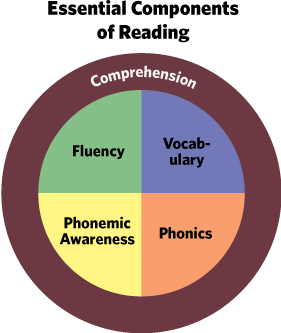
This school year, rareApps will take a deeper look at literacy and technology in specialized settings. Rather than report solely on the features of different apps and technology, our focus will be on examining the five components of reading instruction and investigating technology tools that can leverage research based strategies for instruction as well as support/provide accessibility features so that all students can take advantage of every type of lesson.

November and December: Vocabulary

January: Phonemic/Phonological Awareness

February and March: Phonics

April and May: Comprehension

June: Fluency


Wednesday, January 2, 2013

Article Summary: Apps and Reading

Educational Apps Alone Won’t Teach Your Kid to Read

By Lisa Guernsey and Michael Levine published on Slate.com, December 13, 2012
Educational Apps Alone Won't Teach Your Kid to Read

This is a fantastic article that clearly reports on the current state of educational apps related to reading. The following is a brief summary of the article.
There exist thousands of apps on the marketplace, many claiming to teach children how to read.  Guernsey and Levine found that most apps teach the most basic reading skills of letter identification and letter/sound relationships.  Presently, neither app nor ebook has harnessed the affordances of iPads and tablets to teach higher level skills of vocabulary and comprehension, which are critical components of reading for purpose.
·         Most top-selling reading apps teach the basics: alphabet identification and phonics

·         Most apps don’t address higher-level skills like vocabulary and comprehension – critical components for becoming a fluent reader

·         Many ebooks are currently designed to be watched, rather than read

·         Ebooks could leverage the interactivity of the tablet, but for the most part developers aren’t designing stories to address comprehension and vocabulary

·         The authors imagine a good ebook as one that asks questions that leads to interaction with the screen – combined with interaction with the parent or teacher

·         80% of top-selling paid education apps are marketed for children, many claiming to help children learn to read

·         Apps often do not provide information about how and if they accomplish their stated goals

“At its best, the technology complements the work of trained teachers and parents.  It doesn’t replace it.”
-Guernsey and Levine